Independent research. Autwary does not use affiliate links, earn commissions or accept payment for rankings. How we review
So what does an extended car warranty cover in practice? “Extended warranty” is a catch-all term that covers plans ranging from bare-bones engine protection to near-complete vehicle coverage. What you’re actually protected against depends entirely on the plan tier you buy — here’s a breakdown by system.
Systems an extended car warranty commonly covers
- Engine: internal lubricated parts, block, cylinder heads, timing components
- Transmission: internal parts, torque converter, transfer case (on 4WD/AWD vehicles)
- Drive axle/driveshaft: CV joints, differential, axle shafts
- Electrical system: alternator, starter, power windows/locks, wiring (on stated-component and higher tiers)
- Air conditioning and heating: compressor, condenser, heater core (on stated-component and higher tiers)
- Steering and suspension: power steering pump, rack and pinion, shocks/struts (on higher tiers)
- Fuel system: fuel pump, injectors (on higher tiers)
- High-tech features: navigation, backup cameras, advanced driver-assist sensors (on top-tier exclusionary plans only, and often with a separate “tech package” add-on)
What’s almost never covered
- Routine maintenance (oil changes, brake pads, tire rotations) — some plans bundle limited maintenance separately, but it isn’t “coverage” in the repair sense
- Wear-and-tear items: brake pads/rotors, wiper blades, tires, batteries
- Pre-existing conditions or damage from an accident (that’s what auto insurance is for)
- Cosmetic issues: paint, upholstery, dents
- Damage from lack of maintenance (skipped oil changes voiding an engine claim, for example)
The line between a wear item and a covered failure is where many claims are won or lost. We compare what two real sample contracts say in does an extended warranty cover wear and tear?
Coverage by system, mapped to plan tier
It helps to see coverage laid out against the three broad tiers discussed in our Bumper-to-Bumper vs Powertrain guide, since “does my plan cover X” almost always comes down to which tier you bought.
| System | Powertrain | Stated-component | Exclusionary |
|---|---|---|---|
| Engine & transmission | Covered | Covered | Covered |
| Drive axle/driveshaft | Covered | Covered | Covered |
| Electrical system | Not covered | Covered (if named) | Covered |
| Air conditioning/heating | Not covered | Covered (if named) | Covered |
| Steering & suspension | Not covered | Covered (if named) | Covered |
| Fuel system | Not covered | Covered (if named) | Covered |
| ADAS/high-tech sensors | Not covered | Rarely covered | Sometimes, often as a paid add-on |
| Wear items, cosmetic, maintenance | Not covered | Not covered | Not covered |
Real-world claim examples
Coverage lists are easier to apply with concrete examples of how a claim would likely be handled:
- A timing chain fails at 80,000 miles. This is squarely an engine-internal component and is covered under all three tiers, including basic powertrain plans.
- An alternator dies and the battery won’t hold a charge. The alternator is an electrical-system part; a powertrain-only plan denies this claim, while a stated-component plan (if electrical is named) or an exclusionary plan covers the alternator — though the battery itself, as a wear item, is typically excluded either way.
- A power steering pump fails. Covered under stated-component plans that name steering, and under exclusionary plans, but not under powertrain-only coverage.
- The infotainment touchscreen stops responding. This is one of the more commonly denied claims across the industry — infotainment electronics fall outside powertrain and most stated-component lists, and even some exclusionary plans treat it as excluded “convenience” technology rather than a core system.
- Front brake pads wear out at 35,000 miles. Not covered under any tier — brake pads are a wear item, not a mechanical failure, regardless of how broad your plan is.
- A turbocharger fails at 70,000 miles on a turbocharged engine. Many providers treat the turbocharger as part of the engine assembly and cover it under all three tiers, but some contracts list it as a separate named component only on stated-component and exclusionary plans — confirm this specifically if your vehicle is turbocharged, since it’s an expensive part to guess wrong about.
Edge cases worth knowing about
- Consequential damage. If a covered part’s failure causes damage to an otherwise-excluded part (for example, a covered engine sensor failure that then damages an excluded component), many contracts cover the resulting “consequential” damage even though that second part wouldn’t have been covered on its own. This isn’t universal — check your specific contract’s consequential damage clause.
- Maintenance-linked denials. An engine claim can be denied if you can’t produce maintenance records showing the required oil changes were performed on schedule, even if the actual failure had nothing to do with oil changes. Keep every service receipt for the life of the contract.
- Hybrid and EV components. Traditional powertrain definitions were written around internal combustion engines. Hybrid battery packs, electric motors, and EV-specific drive units are not automatically covered under a “powertrain” label — confirm explicitly how a plan treats hybrid/EV-specific components before buying one for that kind of vehicle.
- Modified vehicles. Aftermarket modifications (lift kits, performance tuning, non-factory parts) can void coverage for related components, and in some cases affect the whole contract. Disclose modifications upfront rather than finding out at claim time.
- Diagnostic-only visits. A visit where a mechanic investigates a symptom but ultimately can’t pinpoint a covered failure may leave you responsible for the diagnostic fee, even though the same fee would likely be reimbursed had the cause turned out to be covered. Ask upfront how your provider handles a diagnosis that comes back inconclusive or excluded.
- Multiple failures in one visit. If two unrelated parts fail during the same shop visit — one covered, one not — expect the invoice to be split, with the covered part going through the warranty and the excluded part billed to you directly. Ask the shop to itemize the estimate by part before authorizing repairs so this isn’t a surprise at pickup.
How to know exactly what your plan covers
Marketing pages describe coverage in broad strokes; the actual contract — specifically the “covered components” or “what is not covered” section — is the only place with a legally binding answer. Ask for the full sample contract for your specific plan and state before you buy, not just a brochure. See What to Look for in an Extended Car Warranty Contract for exactly what to check.
For the difference between the two main coverage philosophies, see Bumper-to-Bumper vs Powertrain Warranty.
What to do before you assume a repair isn’t covered
It’s worth resisting the urge to assume a denial is final the moment a shop mentions a part “probably isn’t covered.” Get the specific reason for the denial in writing — is it because the component isn’t named on your list, because it’s a listed exclusion, because of a maintenance-record gap, or because the provider believes it’s a pre-existing condition? Each of those reasons has a different path forward: a components-list gap might be worth appealing if the part is closely related to something that is named, a maintenance-record gap might be resolvable if you can locate the missing receipt, and a pre-existing-condition determination is worth challenging directly if you have documentation showing otherwise. Most providers have a formal appeals or escalation process — ask for it by name rather than accepting a verbal “no” from the first person you speak with.
A practical checklist before you buy
- Get the full written contract for your exact plan and state, not a generic brochure.
- Search the contract specifically for your vehicle’s known weak points (ask your mechanic if unsure) and confirm they’re named or not excluded.
- If your vehicle has ADAS, a large touchscreen, or hybrid/EV components, ask in writing whether those are covered or require an add-on.
- Confirm what documentation (maintenance records, inspection reports) you’ll need to have on hand at claim time.
- Read the consequential-damage clause, if one exists, so you understand how failures that cascade into other parts are handled.
- Ask specifically how a mixed claim (one covered part, one excluded part, same visit) is billed and itemized.
FAQ
Do extended warranties cover electrical problems?
Only on stated-component or exclusionary plans — basic powertrain-only plans generally exclude electrical systems entirely.
Are sensors and driver-assist features covered?
Sometimes, and usually only on top-tier exclusionary plans or with a separate technology add-on — always confirm this specifically if your car has ADAS features, since replacement sensors can be expensive.
Is a check engine light diagnosis itself covered?
Diagnostic time to identify a covered failure is generally reimbursed as part of a covered claim, but diagnosing an issue that turns out to be excluded (a wear item, for example) typically isn’t — ask how diagnostic fees are handled if the cause turns out not to be covered.
Does coverage differ by state?
Yes — extended warranty contracts (often technically “vehicle service contracts”) are regulated at the state level, and specific terms, cancellation rights, and even available plans can vary by state. Always request the version of the contract sold in your state.
What happens if a part isn’t explicitly listed as covered or excluded?
On a stated-component plan, anything not explicitly named is treated as not covered. On an exclusionary plan, anything not explicitly excluded is treated as covered. This is exactly why knowing which structure your contract uses matters more than its marketing name — see Exclusionary vs Stated Component Coverage.
Will my claim be denied if I used an independent mechanic instead of a dealer?
Most third-party warranty providers allow repairs at any licensed repair facility, not just dealerships, but always confirm this in your specific contract — some plans require repairs at ASE-certified shops or require pre-authorization before work begins.
Are seals and gaskets covered the same way as the parts they seal?
Not always — some contracts treat a seal or gasket failure that causes a fluid leak differently from an internal mechanical failure of the same component, even under the same tier. If your vehicle has a known history of seal or gasket issues, ask specifically how your contract treats leaks versus internal failures.
Can I add coverage for a specific component I’m worried about, without upgrading the whole plan?
Some providers offer named add-ons for specific systems (for example, a seals-and-gaskets add-on or a technology package) without requiring a full tier upgrade. Ask if this option exists before assuming you have to choose between your current tier and the next one up.
For official consumer guidance, see the Federal Trade Commission’s guide to auto warranties and auto service contracts.
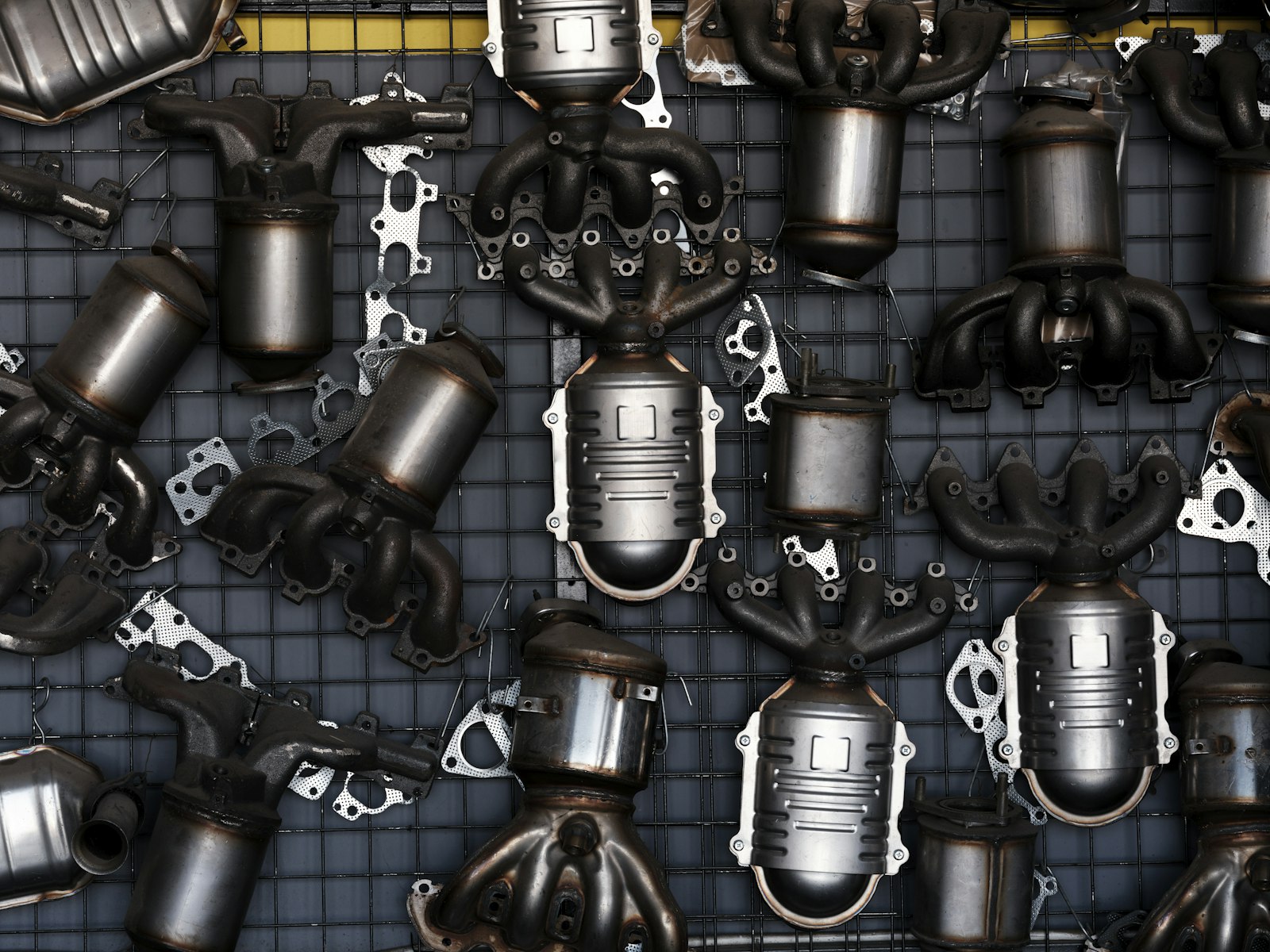
Emissions parts are a special case: the catalytic converter already has a federal warranty of 8 years or 80,000 miles on most cars. We explain how it works in our catalytic converter warranty guide.